
The last eight weeks have been both rewarding and challenging as I navigated my first formal instructional design course at UNT. I can wholeheartedly admit that I have a deep appreciation for instructional designers (IDs) and complexities of this role than ever before. I am also excited about using what I’ve learned in this course in my current role as I work to build a team that researches new edtech tools, evaluates current edtech strategies at my university, and develops training materials to support our faculty.
As the theme of the summer has been one of reflection, both professionally and personally, this post is filled with what I’ve learned, the importance of course material/textbook selection, and where I’m headed next.
A few lessons learned about instructional design
1. The development of elearning content is much more complex than the tools convey. I have a knack for grasping edtech tools relatively quickly. It may be because I’m not afraid to click a button or try something out and completely delete it later (no matter how much time it took to create). I’m not sure where this skill comes from, but I’m grateful to have it. This ability to quickly learn a tool, however, did not help me when I was the designer of the learning experience. There is a separate skill set required to examine the content, select the appropriate method for displaying/producing the content, and consider the individual learner’s needs at the same time. I would guess some individuals have both the design and the development skill, but I would argue that in order to create exception courses/training materials that you need a team with the ability to specialize in one or the other. In short, quality instructional design requires a team.
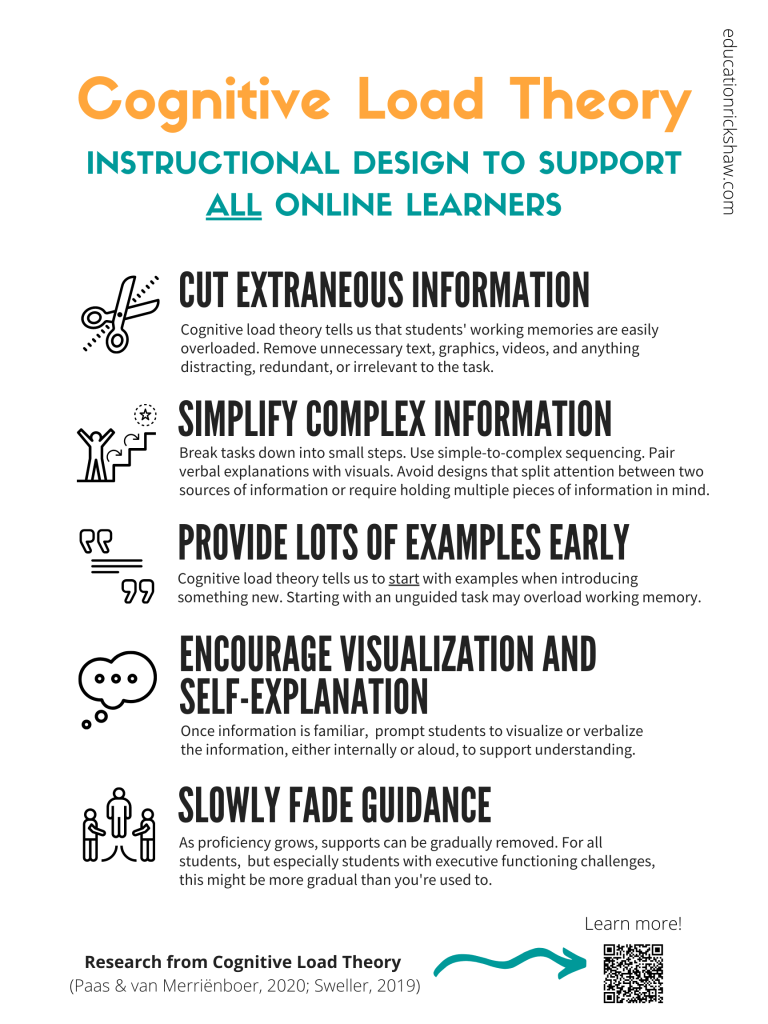
2. Templates and examples are essential, both for new instructional designers and students in any course. Providing a course design template or instructional engineering document to an ID offers a bit of structure for all the creative energy required to develop a course. It also follows what we know about cognitive processing in that priming the learner through applicable examples can help them move from knowledge to application of the knowledge more quickly. Too much new information overwhelms working memory.
The same was true in my course development in that new project managers need to see completed project documents from a past project in order to see how their project fits into a similar framework. In short, learning occurs in context (Driscoll, 2002), we must always provide examples and/or templates.
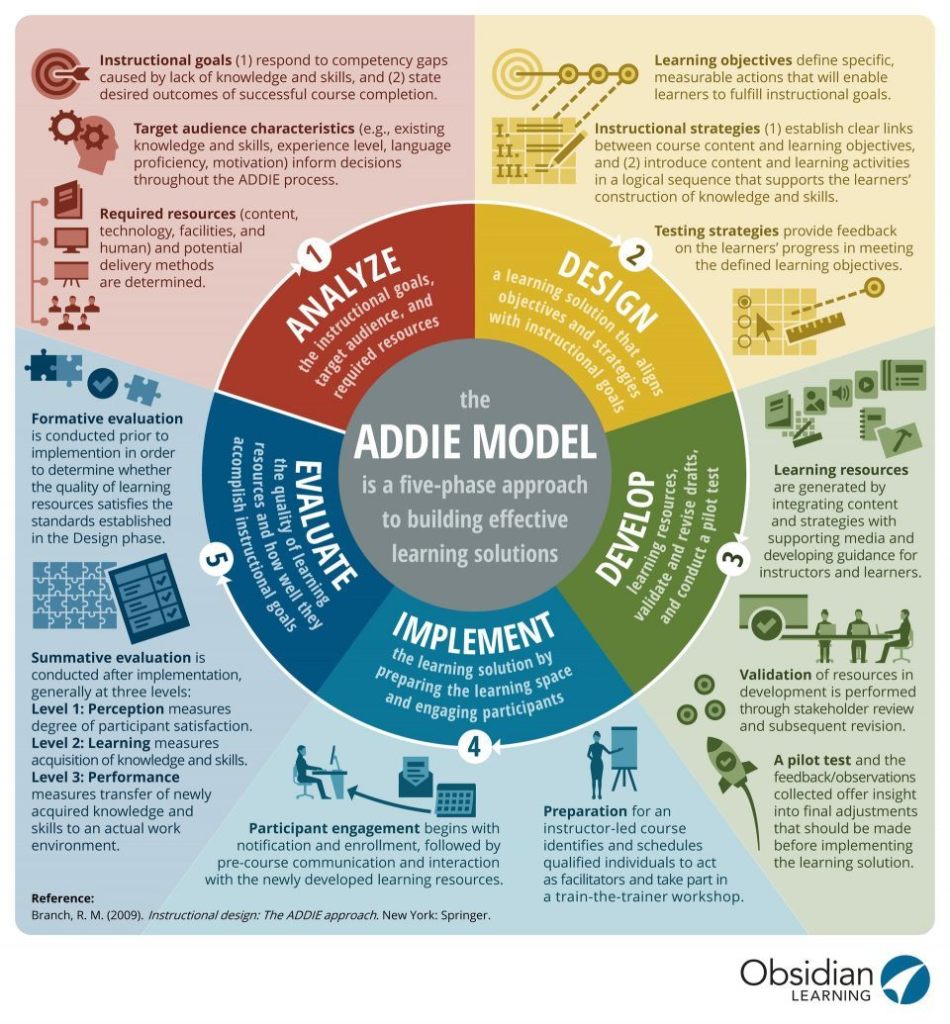
3. iterate. iterate. iterate. An agile approach to instructional design allows for iteration throughout all stages of the ADDIE model. This is the most valuable lesson I learned this summer. Getting something for the client to look at quickly allows you to make tweaks to the design throughout both the design & development process. It will also ultimately save you time in the development stage in case there is a flow to each module related to structure of the content items. Solidify Module 01 before creating Module 02 — fix it once, as opposed to seven times in seven modules. (I did not do this, but will most definitely do it next time). Rapid design and development will benefit you in the long run. In short, spending more time up front will save you a lot of time later.
Course resources: Know your audience
We used Piskurich’s 3rd edition of Rapid Instructional Design: Learning ID Fast and Right for the course. I found it helpful in terms of templates for specific types of learning experiences. He shared a fantastic survey tool to gauge learner satisfaction upon completion of the course. However, because of the approach to the writing, I struggled to want to read the text. I wanted less conversational writing and more structure how-to’s. The author spent more time trying to figure out how to give all audiences — from novice to expert — something in his book when his time would be been better spent focusing on one group. When you flip back and forth between introductory and mastery level material, the flow of the text is not helpful to either audience.
My thoughts on the text may also be clouded by the fact that I developed elearning modules over face2face training. While the author mentioned elearning, the focus of the text was primary for classroom-based course design. Our professor did share the FAO eLearning methodologies book that I found amazingly helpful. The structure of the text focused on core aspects of instructional design that apply across any course/training module, but keyed in on particular aspects to consider for how to chunk content depend on the goals of your elearning module, interactive creating interactive content with various courseware options, and the management of course facilitation depending on learner needs.
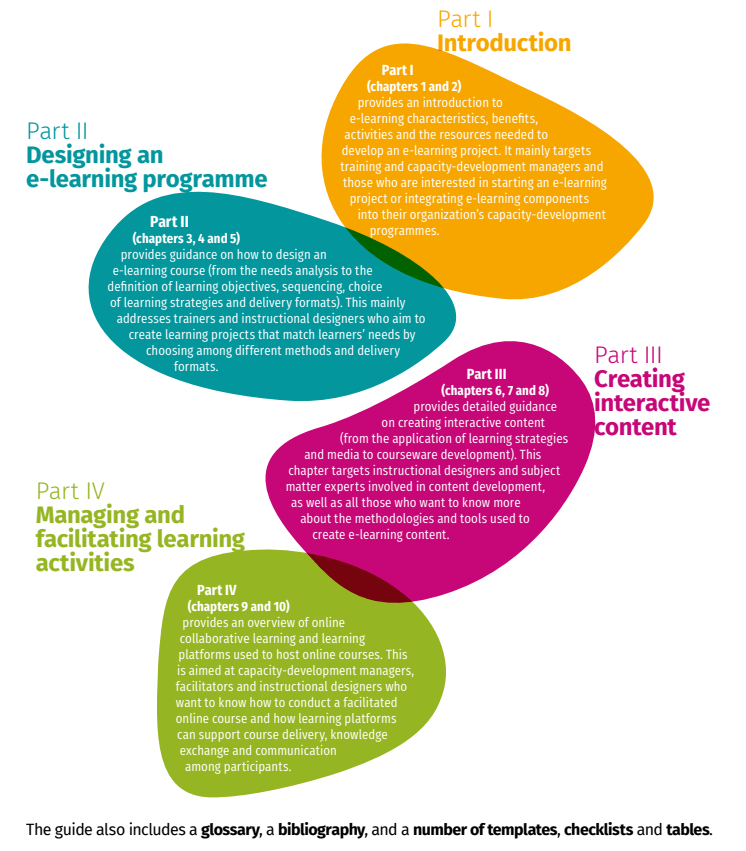
The FAO methodologies resource and the iDEA Book by iDesign that I have shared in the past are fantastic tools for instructional designers and faculty designing online courses this fall. They provide both the background on instructional design as well as practical tips and easy-to-follow guidance for utilizing instructional design that benefits individuals at any level of experience.
The field of instructional design
I am a learner and an educator. I possess a deep desire to constantly improve and learn everything I can about a given topic, and right now I am most interested in how humans learn and the most effective strategies to help them learn. The field of instructional design captures all my interests and presents opportunities for growth as society changes and new technologies or challenges present themselves. Humans always need to learn something, we are constantly evolving as a species. There is also so much to research and evaluate within the field of instructional design as it relates to elearning and the use of multimedia.
I am not looking for a new job, I love my team and the direction our work is headed. However, I am grateful for UNT in providing this course with the learning technologies graduate program as it provides a springboard into the ID field that opens doors for students while also providing immediate applicability to their current jobs. As COVID continues to impact our working world, instructional designers will become increasingly valuable commodities to assist corporations and educational institutions in migrating to a more fluid workforce. The lines between home and work will blur permanently. This requires learning across generational boundaries, and instructional designers are just the group to help us navigate this new space.
As always, thanks for learning and reflecting with me.
References
Driscoll, M. (2002). How people learn (and what technology might have to do with it). ERIC Digest, ERIC Identifier: ED470032.

 heather zink. a learner.