I’m at OLC Accelerate 2023 in DC this week. An annual connection to friends and colleagues paving the way for innovation in digital learning. The Online Learning Consortium has been a home for me since my first conference in 2010. I thoroughly enjoy sharing ideas and learning from others (read: serial learner wanting to be surrounded by learning professionals). I would invite you to also consider whether you have a professional network space you are connecting with yet. If not, let’s chat about how to get you to the next OLC event.
Last year I met Melissa Hortman, an amazing thought leader in higher education working for Microsoft, and knew quickly we spoke the same language. Fast forward a few months and AI was everywhere with the launch of ChatGPT. Melissa and I had met a few times since October 2022 and decided we needed to present together; OLC Accelerate was the perfect spot. Both innovators on the technology adoption curve and excited for all that AI could bring to our professional lives as educators, we knew it was the perfect topic for a proposal. So, here we are, 9 months later and sharing practical strategies for implementing disruptive technologies.
You need a strategy, you need to be intentional about your work, and it will benefit both you and your students. Our slides and handout are linked in this post. We’d love to continue this conversation on LinkedIn if you have any questions.
I’m presenting this week at the Association for Continuing Higher Education, Inc. 85th Annual Conference in Charleston, SC. I was asked to present by my colleague, Cristi Ford, at D2L to share a journey I’ve helped to support at Graduate School USA this year with the implementation of D2L Brightspace for virtual instructor led classes. My presentation slides are linked here for reference, and I hope you’ll find value in the challenges we faced with implementing new technology and navigating a digital transformation effort coming out the pandemic.
Another opportunity to create an infographic using Piktocharthelped me to see the benefits of this ‘new to me’ platform. I enjoy the visual presentation of information and found the platform much easier the second time around. I like the playful images and icons available helped me find joy in this process. The various icons for social media helped me to create this presentation.
Let me know how you are using social media in your classes. Blogging and Twitter are by far my favorite platforms, but I am starting to see opportunities with TikTok and Instagram for sharing videos. Plus, they are just fun and sometimes we need to make sure we incorporate a little fun and not take ourselves so seriously.
And on that note…I’ll share my TikTok account…where I create #plantmom videos every so often. Don’t tell my teenagers…
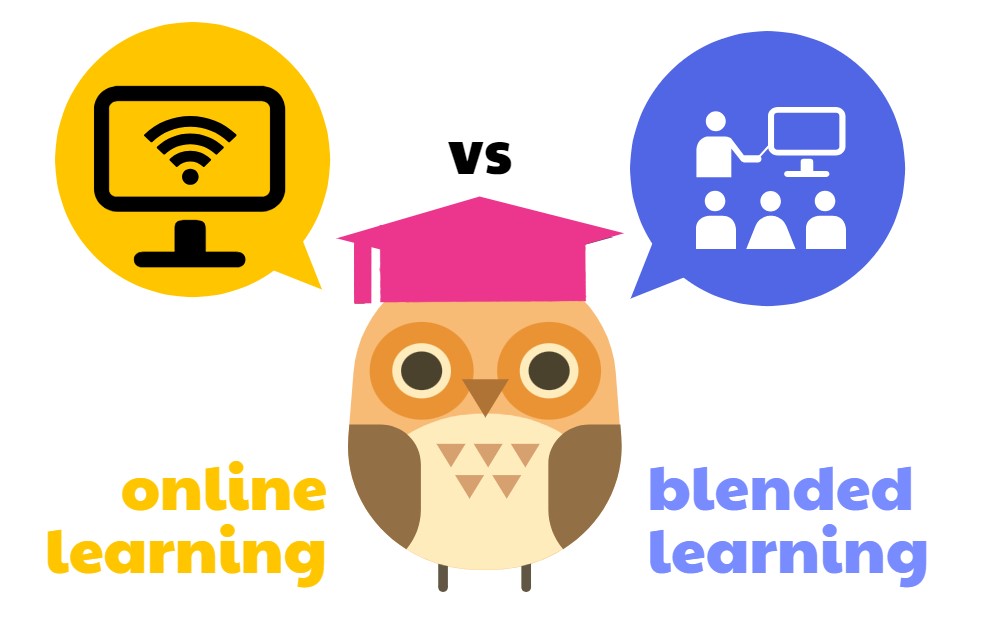
A fun project to work on in my Online Design & Pedagogy course – the research continues to show the benefit of a blended course as face-to-face connections offer additional depth that has not always been possible in online learning. However, with the invention of synchronous collaboration platforms like MS Teams and Zoom, students and instructors can meet in a similar fashion without needing to come to a physical campus.
I’m looking forward to seeing the continual sharing of best practices that have resulted from the pandemic and the shift to emergency remote learning.
As software-as-a-service (SaaS) tools become more pervasive in the learning technology world, support for these tools continues to evolve. Migrating from a hard copy user manual to a digital handbook and, more frequently, a continually updated web-based help site increases access to support materials in a user-centric way. Interestingly, as software companies adopt and utilize agile development processes, the agile design teams prioritize a functional system over clear documentation (Behutiye et al., 2022). This is challenging for the end-user and presents difficulties in adoption, especially for educational institutions that rely on training departments to assist the end-user. The advent of online user communities by SaaS providers has helped users stay connected in cases where documentation lacks. As the director of academic technology, I am continually working with a team to produce training materials for students, faculty, and staff. The online user communities have benefits and drawbacks, depending on the product and how the company has decided to organize the community.
Blackboard Community
Blackboard, Inc., now owned by Anthology, has a well-established user community of which I am a member. While this service has significant benefits to connect Blackboard users across the globe, signing up for an account is required before viewing any of the community information. A Getting Started page (video linked above) has been designed to provide a video overview of the community and answer brief questions, but I found it frustrating that I was required to signup to even view information. The benefits, on the other hand, are access to more experienced users of the platform, badging opportunities recognizing a user’s commitment to the platform for various professional development opportunities, and recorded webinars on recent updates and important topics for training departments. The searchability of this platform needs some work, but if you are willing to dig through some of the high-level menus, most of the time information on topics of interest is categorized well. I do not tend to post to online forums, but I do have team members who find these features valuable.
Another online community used frequently at our institution is the Microsoft Teams Tech Community. This forum is designed to provide users quick access to information and an easily searchable interface. I do not post to this forum, but I do find huge value in the information provided. Microsoft Teams is a user-friendly platform with familiar iconography, but the continual updates to the interface can be overwhelming at first as small changes feel larger when you’re using it on a day-to-day basis. The forum has offered comfort in my frustration with certain features, and guidance on how to tackle common user concerns as well. Without the need to establish a user profile to find information, the barrier to finding information has been removed. Thank you, Microsoft, for recognizing that I don’t always have the time to create a profile for a quick answer to the different types of screen-sharing options or variations in audio controls.
Online user communities were created to serve a purpose. Software companies following agile development processes quickly saw that their ability to maintain clear, consistent documentation while pushing new features into the marketplace would never meet user demand (Behutiye et al., 2022). Allowing customers to help each other and quick pose questions to a larger user group benefits both the customer and the company. For the user though, a level of vulnerability is required to post to a forum admitting you have a question about a topic that may be available elsewhere. The fewer restrictions placed on the user to find information or post information may improve their confidence in posting to a forum. Even so, relying on user communities to serve the support needs of the company needs to be reexamined, as does the continual push to provide a variety of features at the detriment of proper documentation. Software providers who can find a better balance of agile development with user support documentation will succeed further in the marketplace.
References
Behutiye, W., Rodríguez, P., Oivo, M., Aaramaa, S., Partanen, J., Abhervé, A. (2022). Towards optimal quality requirement documentation in agile software development: A multiple case study. Journal of Systems and Software, 183, 1-17. https://doi.org/10.1016/j.jss.2021.111112




 heather zink. a learner.